

User journey mapping workshops
Not sure where along the path your users are struggling?
We'll map every touchpoint, emotion, and decision.
You’ll discover ways to make your user journey smoother than ever.


When a user journey mapping workshop is the right next step
Hardly anyone wakes up thinking, „We need a user journey mapping!“ Instead, it usually starts with a concrete problem:
A new product or feature is coming up, but the big-picture view is missing.
Users drop off, and no one knows exactly where or why.
Product, design, sales, and support each picture the journey differently.
In almost all of these cases, a user journey mapping workshop is the answer. When you work on your own product every day, you eventually lose sight of the breaks — you're simply too close. The workshop brings back exactly that missing outside perspective, in a single day, with the right people in the room.
Book a free intro callFor a step-by-step look at how journey mapping works, see our guide to user journey mapping in 6 steps

Why screens aren't enough
Most teams map screens: homepage, then product page, then cart. Flow done. The problem? The false assumption that this flow is the product. The real thing happens between the screens.
How most teams map
Home
→
Product page
→
Cart
Home → Detail → Cart, done.
From this view, the product is the flow, and the experience in between stays invisible.
How we map
Home
Redirect
Product page
waiting for a response
Cart
drops off
The real story lies in between: context, expectations, emotions, and the touchpoints outside your product.
We map the entire user experience: context, expectations, emotions, and the touchpoints outside your product.
For new products, we start with the MVP journey — what truly matters — and place later ideas as a „future“ layer beneath it. The result is a map with a clear sequence that makes priorities easy to read.
Process
How the workshop works
From prep to handover — in a single day, with a clear outcome.
Before the workshop
Kickoff & preparation
In the intro call and kickoff, we clarify the problem, target groups, and relevant flows. Then we prepare internally: rough mapping and first sticky notes in advance — so the workshop day stays free for thinking.
Bring your personas. If you don't have any, we'll build them beforehand.
On the workshop day
Intensive & facilitated
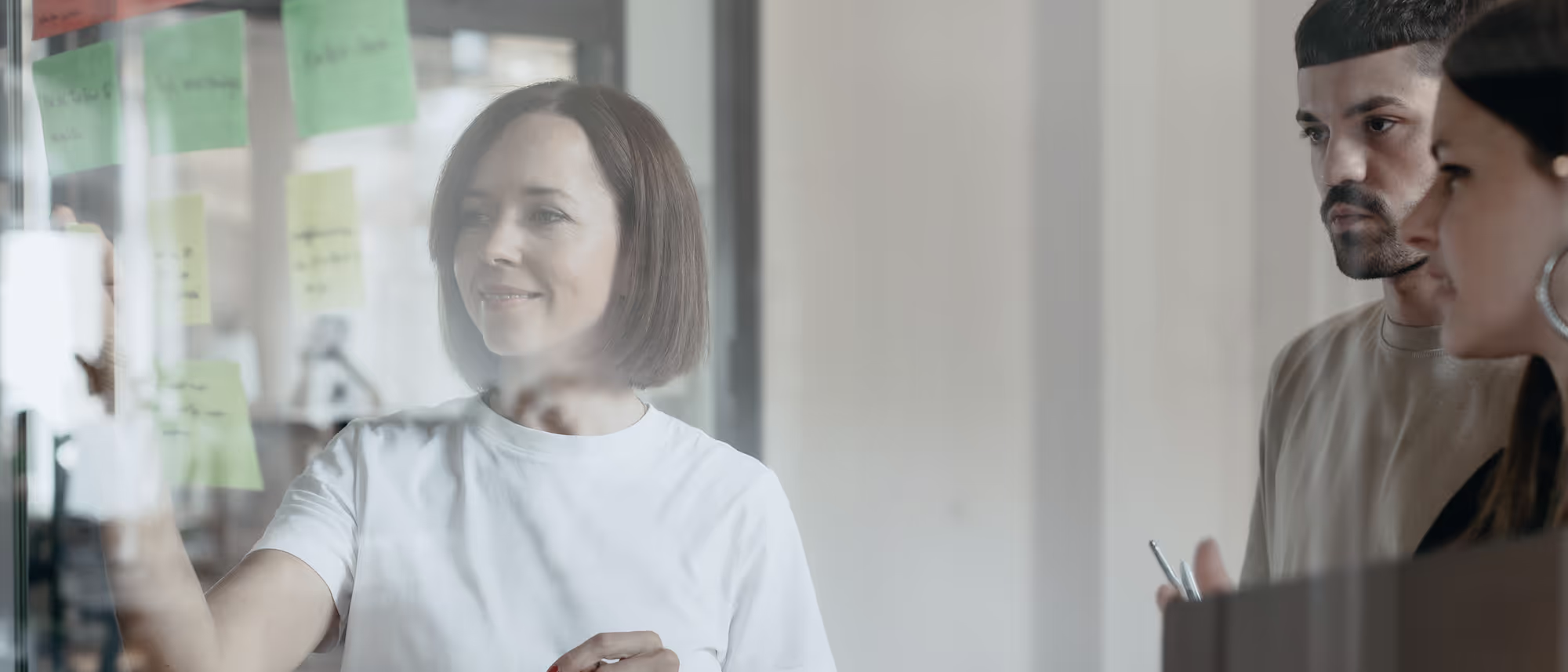
Proven methods — design thinking, empathy mapping, current-/target-state journeys, and dot voting — but only where they serve the outcome. Most important: the right people in the room and the right questions.
We always come as a pair — one facilitator and one person documenting.
After the workshop
Digitize & hand over
We photograph and digitize the board. The sticky notes become a clean journey map in Miro you can keep working with — not a photo that gathers dust on your phone.
Handover including prioritized pain points and recommended actions.
What you walk away with
A digitized user journey map of all relevant flows, as a living document in Miro.
Color-coded gaps and pain points, so it's clear at a glance what's missing.
A prioritized list of actions as a basis for your backlog.
A tool for later: when you want to build a new feature, you'll see right away where it fits into the journey.

And after that?
The workshop is usually just the first step. If you'd like, we'll keep supporting design and implementation directly — but that's optional. Sometimes the map alone is enough to make the right decisions internally.
Discuss design & implementationWho should be in the room
A good workshop stands or falls with the people in the room. The decision-makers from the relevant areas should be there, so decisions actually get implemented.

Product Owner / Product Manager

Head of Design

Leadership

If possible: 1 real user
Ideally, bring existing personas and access to your user insights. If you have neither, we'll build the personas with you beforehand.
What sets us apart
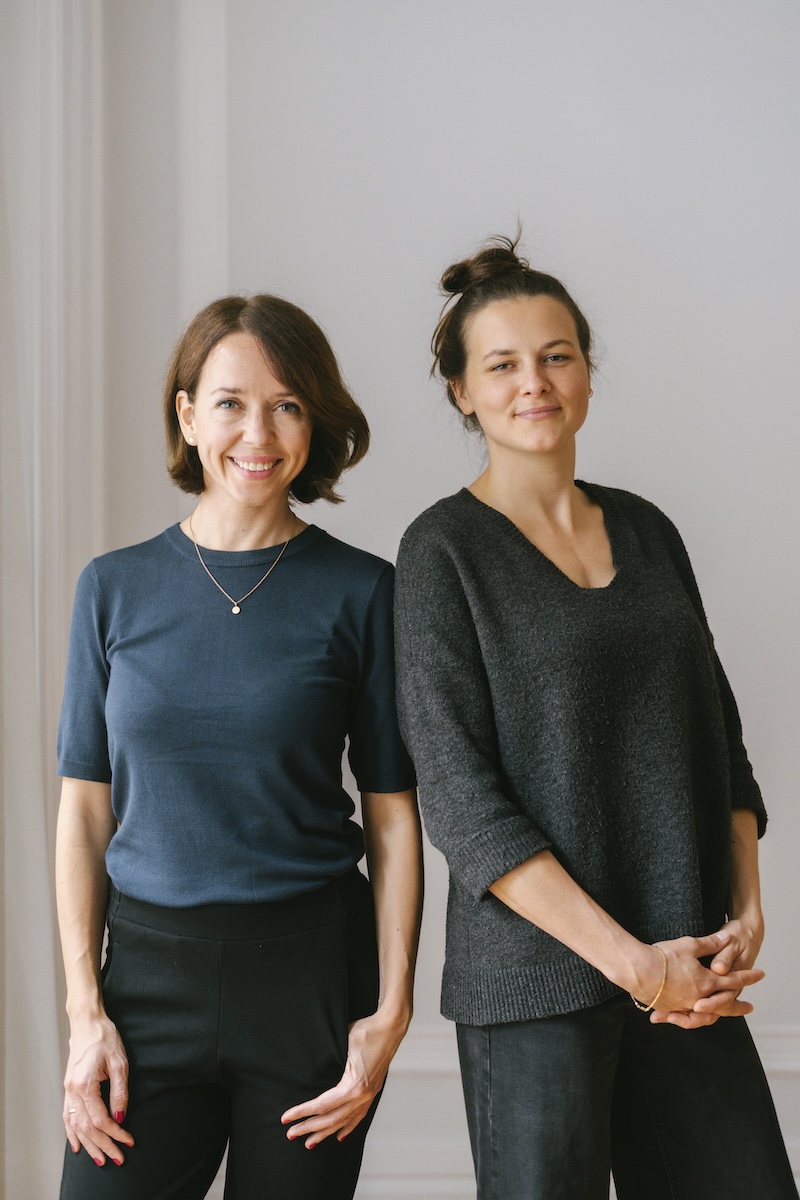
Some of us have been doing UX design for 20 years. We think you notice that most in one thing: we ask the right questions! Including the uncomfortable ones that teams tend to overlook internally.
And as a small, well-practiced team, we only recommend what's truly necessary. When we say one day is enough, one day is enough. That's exactly what the clients we've worked with longest appreciate.
They include the DAAD, which we've supported for years, as well as projects for Setting, Jobsmart, Verbraucherschutz, and Charité.
FAQ
Frequently asked questions
What is a user journey mapping workshop?
A facilitated session in which we map your users' complete journey from their perspective — including emotions, pain points, and the places where something is missing. The result is a visual map that everyone involved can orient around.
How long does the workshop take?
Usually one day. If several complex flows need mapping, we plan for two.
What does a user journey mapping workshop cost?
Most workshops range between €3,000 and €5,000, depending on complexity and the number of flows. The price is fixed and part of the proposal.
Does the workshop take place remotely or on-site?
Both are possible. On-site in Berlin the energy is usually best, and we organize the space and catering. Remote works just as well, especially when your team is distributed.
Who should take part?
The decision-makers from the relevant areas and, if possible, a person from your actual target audience. A compact team works better than a full room.
What do I get as a result?
A digitized user journey map in Miro, color-coded pain points, and a prioritized list of actions for your backlog.
Do we need finished personas?
They're helpful, but not a requirement. If you don't have any, we'll build them with you during preparation.
What happens after the workshop?
You'll have a clear basis for the next steps. On request, we'll continue supporting design and implementation directly.